ALL SAINTS’ CHURCH
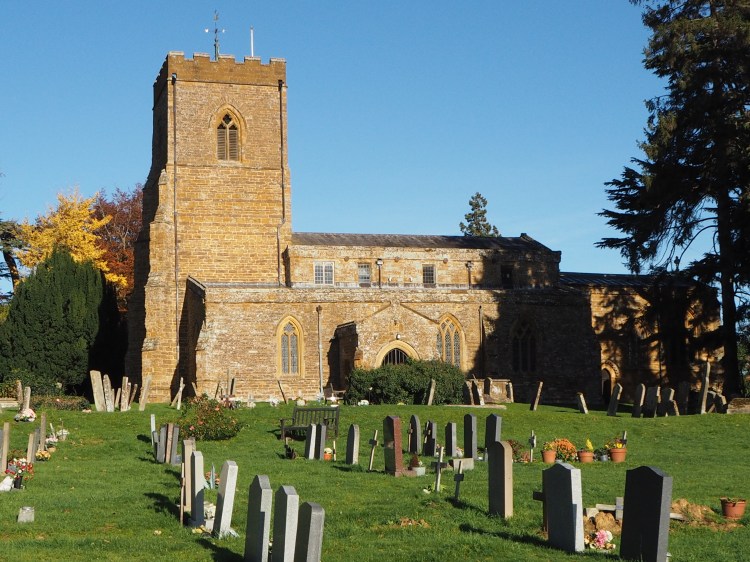
All Saints’ Church is a Grade II* listed building.
The oldest parts of the church are thought to be the base of the tower and the nave,
and date from the 12th Century.
The church is built from Northampton sandstone, thought to have come from quarries in Duston. The stone has weathered badly, and replacement stone comes mainly from Hornton, near Banbury.
The chancel was built at a slight angle to the nave, inclining to the left, known as a “weeping chancel”. The chancel was lengthened in the 15th century, when 3 windows were added.
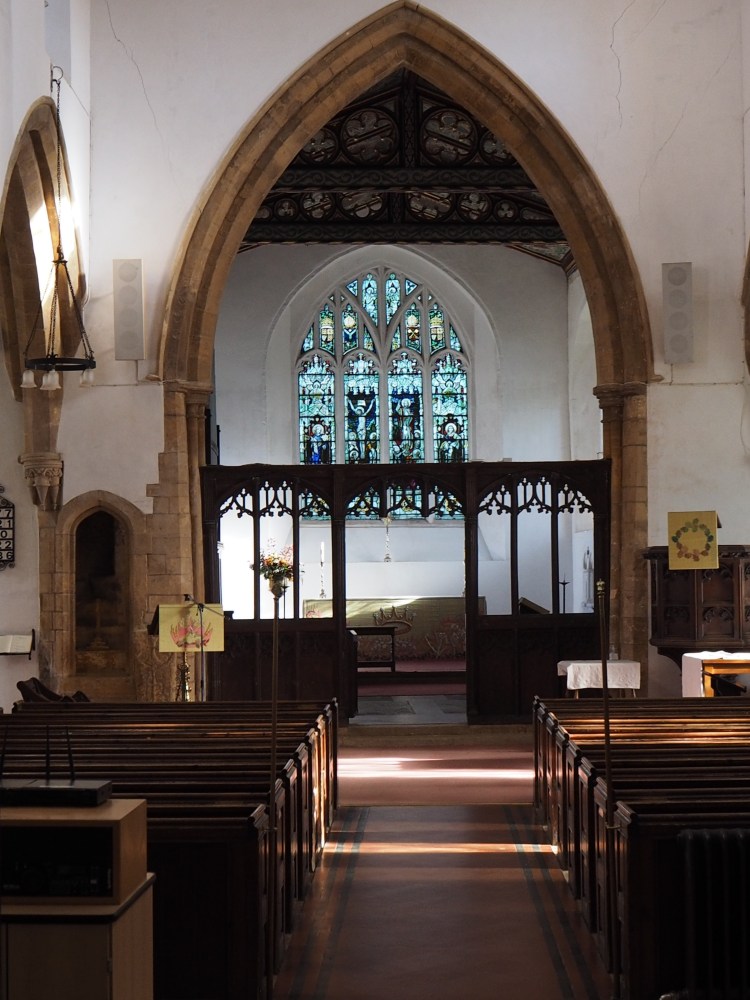
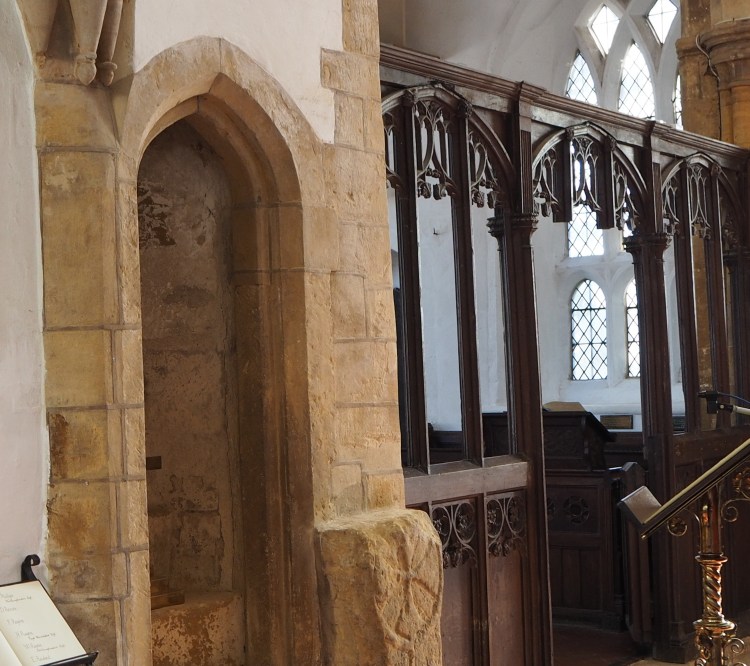
The carved oak screen between the chancel and nave is also 15th century. Formerly it was coloured, and above it on wooden vaulting was a Rood Loft. In the loft would be figures of Jesus on the cross, St. Mary and the disciples with candles.
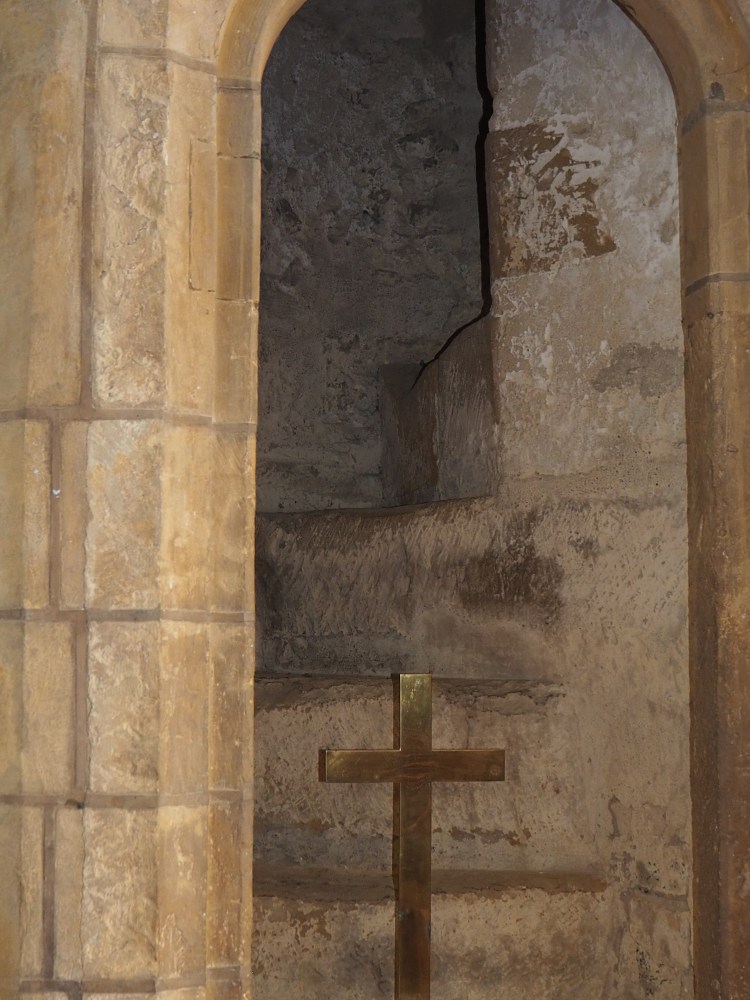
The stairs, which appear to go nowhere, would have accessed the rood loft.
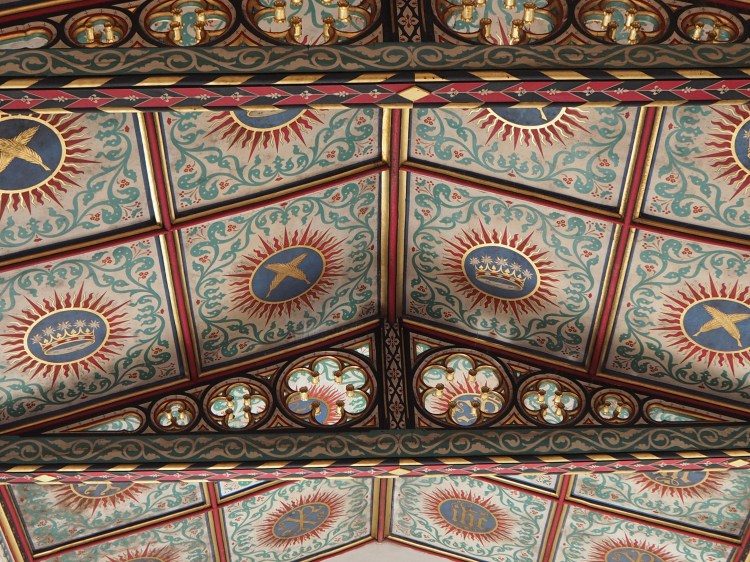
The painted ceiling was added in 1963, to a design by S.E. Dykes Bower, a Church architect best known for his work at Westminster Abbey and Bury St. Edmunds Cathedral.
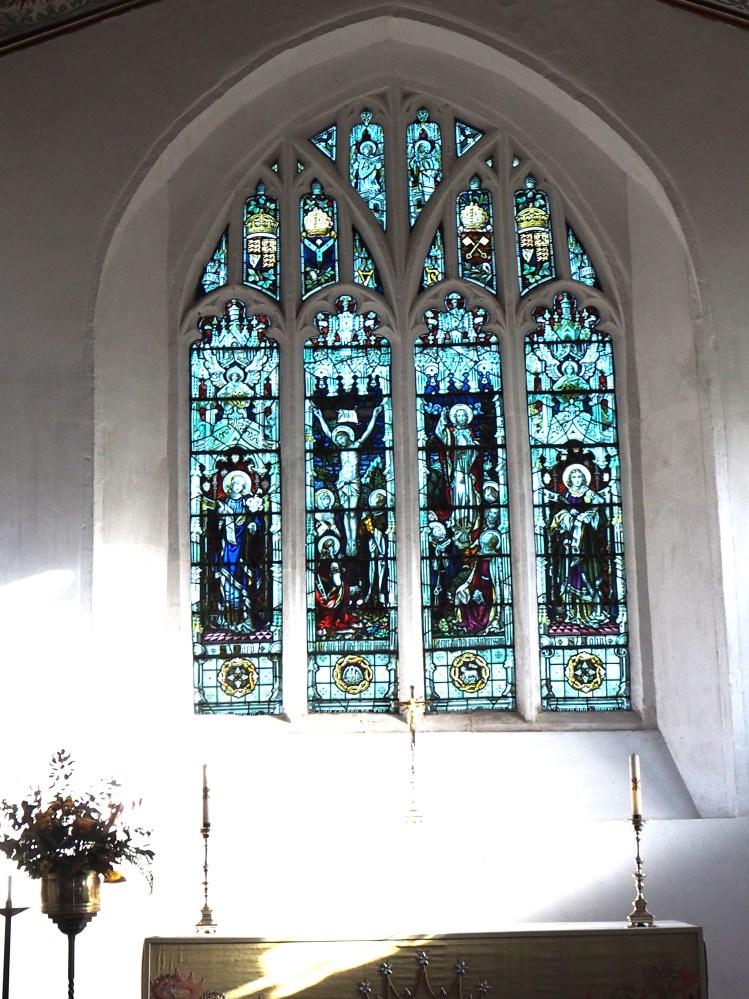
A stained-glass window in the east of the chancel was installed in 1903 as a memorial to Queen Victoria.
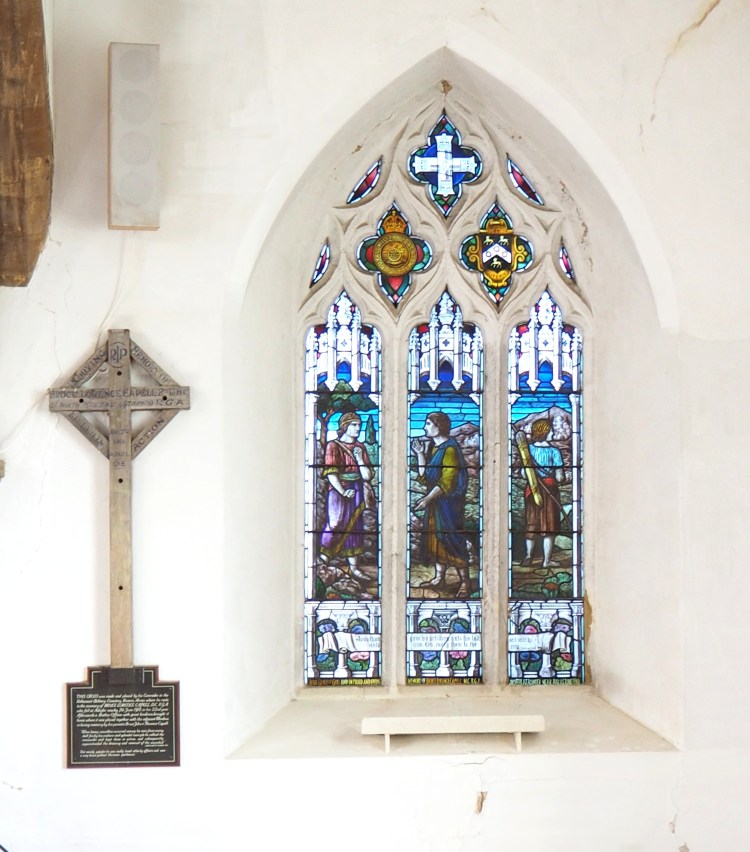
The east window in the south aisle is in memory of 2nd Lieutenant Bruce Lorence Capell MC RGA who was killed in action near Arras on June 7th 1918. On the adjacent wall is mounted a wooden cross which temporarily marked the grave of Lt Capell, who is buried in the Bellacourt Military Cemetery near Arras.
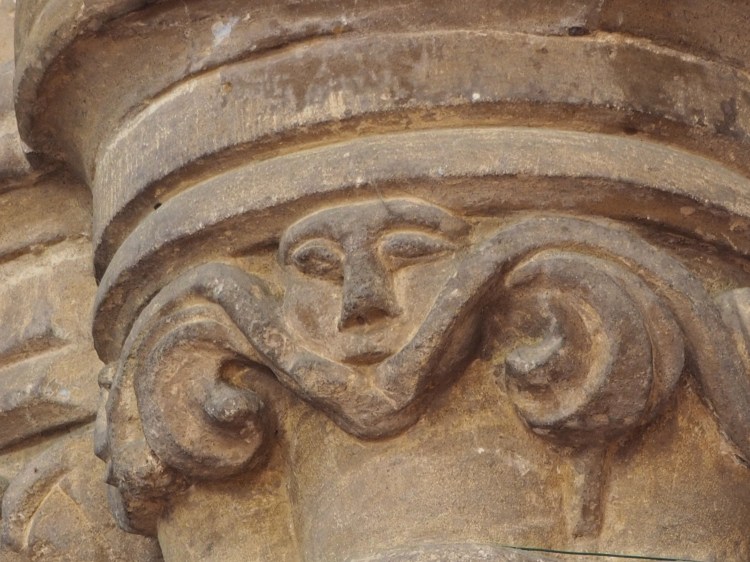
A Green Man peeps out from the foliage of a nearby column. The Green Man represents the cycles of life, death, renewal and humanity’s connection to nature, and symbolises a cycle of rebirth, seasonal renewal and the endless loop of growth and decay in the natural world.
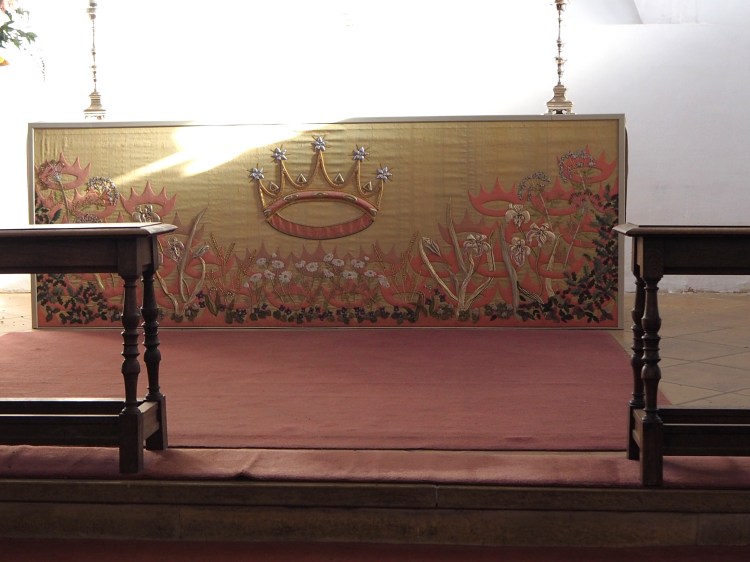
The altar frontal, presented in the memory of Mrs Marjory Boyd by her son.
The design is based on the crown, the symbol of All Saints’ church. Through the trellis, formed by crowns, grow country plants and flowers providing the life needed to reflect the living faith.
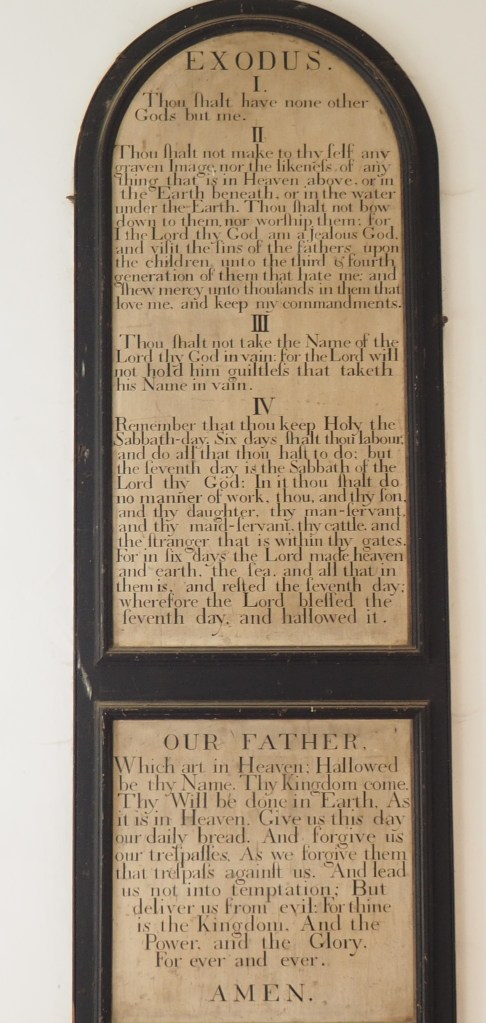
As is custom, the 10 commandments are displayed, in this case on the walls of the west end, below the tower.
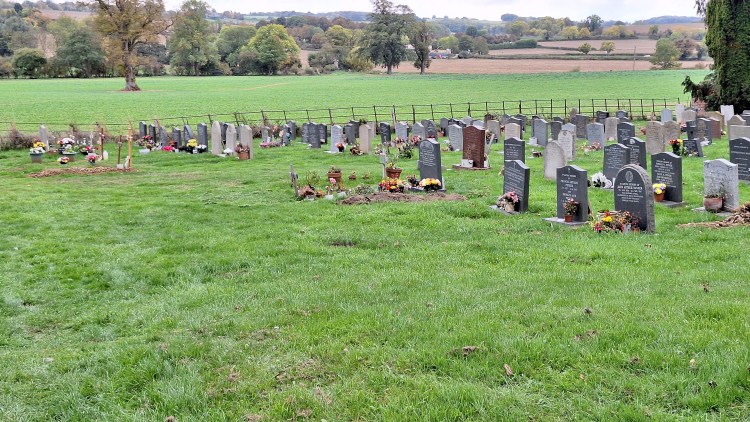
The south door overlooks the churchyard with views down over the river Nene. Whilst the church is now to the southern edge of the village, originally Flore was closer to the river, the source of water, but moved to its present location on higher ground to avoid flooding.
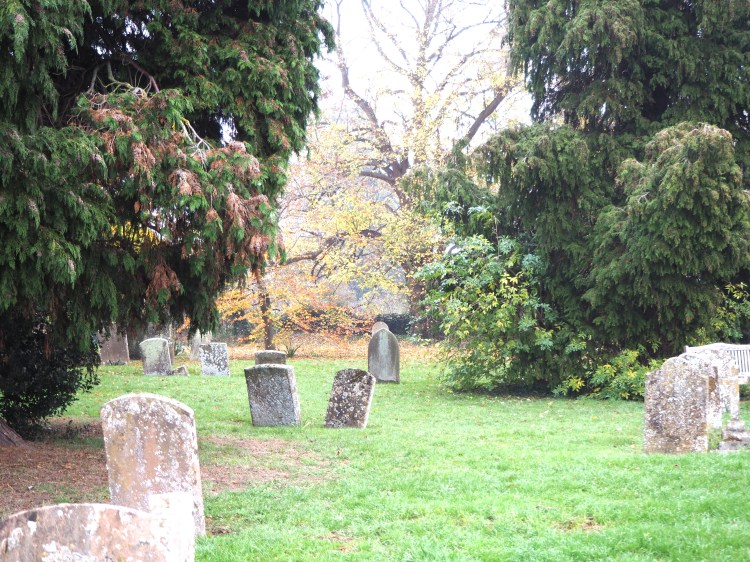
A group of local environmentalists is developing the closed churchyard for nature enhancement.
THE FLORE FLOWER FESTIVAL
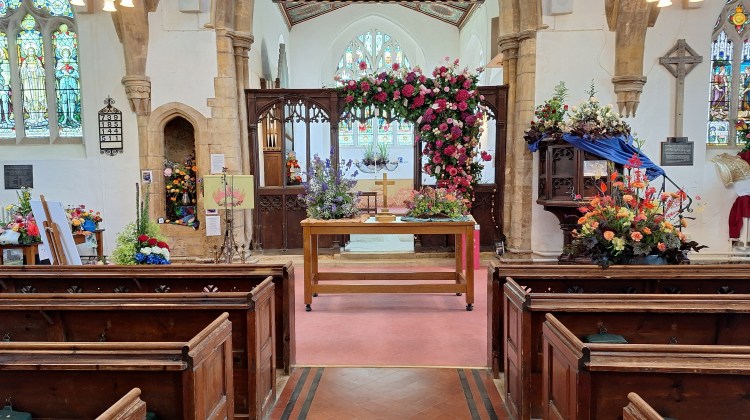
The first flower festival in 1963 ran from Thursday afternoon to evensong on Sunday.
14,000 people attended despite incessant rain. The funds raised were sufficient to rehang the bells and carry out important restoration work.
Festivals have continued on the nearest weekend to midsummer, on Saturdays and Sundays only, missing only one year due to COVID restrictions. Funds raised continue to be an important contributor to the maintenance and upkeep of the church.

